


About the Cloning trope
Cloning confronts the genre with a duplicated self and the vertigo that follows. When a person can be copied — grown from a cell, replicated down to memory, manufactured to order — the questions cascade: is the clone a separate individual or a mere copy, a person in their own right or a thing made for use? Science fiction has mined this seam for some of its most humane and unsettling work. Kazuo Ishiguro's Never Let Me Go follows clones raised to be organ donors, and its quiet devastation comes from how fully it insists on their inner lives, their loves and fears, against a world that refuses to grant them worth.
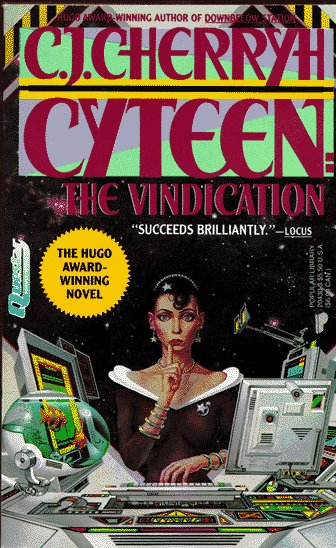
The trope's power is the way it pressures the idea of the unique self. If you can be copied, what made you singular in the first place? C.J. Cherryh's Cyteen explores the deliberate replication of a person, raising a clone to reproduce not just a body but a mind and a destiny, and asking whether identity can be manufactured. Nancy Farmer's The House of the Scorpion gives a cloned boy a soul the powerful insist he cannot have. Across these stories, the clone becomes a mirror held up to assumptions about individuality, dignity, and the rights of a person whose origin was a copy rather than a birth.
Distinct from broad genetic engineering, which designs and alters, cloning specifically duplicates — the drama is in the copy and the original standing side by side. And distinct from uploaded consciousness, the clone is fully embodied flesh, not data. The trope endures because it strikes at something we hold dear — the belief that each of us is singular and irreplaceable — and refuses to let it rest easy. It asks whether a copied life is any less a life, and it tends to answer, with quiet force, that it is not.
Why readers love it
- Copies of people, grown to order
- The vertigo of a duplicated self
- Identity, dignity, and worth
- Is a copied life any less a life