First Contact sci-fi books
The encounter that changes everything — if we can only understand it.





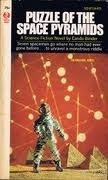
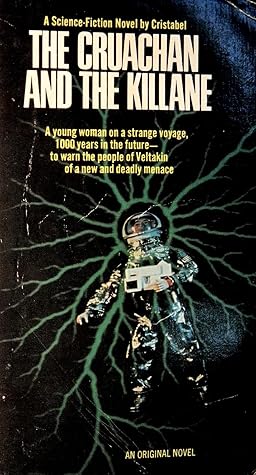











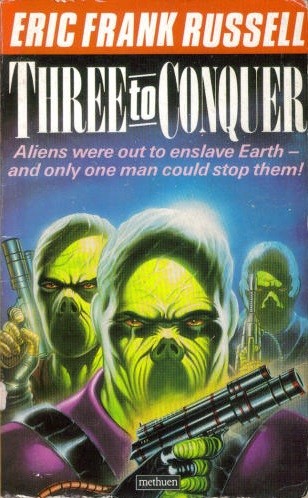


About the First Contact trope
First contact is science fiction's great act of imagination: not just inventing an alien, but inventing the moment two utterly separate intelligences try to reach each other across a gulf with no shared anything. The drama lives in the gap. Arthur C. Clarke's Rendezvous with Rama sends explorers into a silent alien craft that never explains itself, and the awe comes precisely from what stays unknowable. Ted Chiang's Story of Your Life, filmed as Arrival, makes the act of learning an alien language the entire plot, and lets that learning reshape how a mind experiences time itself.
What separates first contact from alien invasion is intent and emphasis. Invasion is about force and survival; first contact is about meaning. Can we even recognize the other as intelligent? Liu Cixin's The Three-Body Problem treats contact as a civilizational hinge, where a single transmission decides the fate of two species. China Mieville's Embassytown pushes further, building an alien language so foreign that humans can only speak it in pairs, and the misunderstandings carry existential stakes. The encounter is a mirror as much as a meeting, forcing humanity to define itself against something it cannot assume anything about.
The trope endures because it sits on the genre's deepest question: are we alone, and if not, what then? It can be wondrous, as in Carl Sagan's Contact, or quietly hopeful, as in Becky Chambers's warmer crews finding common ground over shared meals. Stanislaw Lem's Solaris pushes the idea to its bleak limit, presenting an alien ocean so vast and indifferent that true contact may simply be impossible. But the trope always returns to comprehension as the real frontier. The ship can cross light-years in an afternoon; the harder distance is the few feet between one kind of mind and another, and whether anything meaningful can pass across it.
Why readers love it
- Communication as the central challenge
- Wonder at the genuinely alien
- Humanity defined against the other
- Confronting the are-we-alone question